You paid for the ad.
Someone clicked it.
They filled out the form.
And then…nothing.
No appointment. No estimate. No sale.
It’s easy to look at that result and decide the marketing isn’t working. Maybe you need better ads. A different agency. More leads.
But sometimes the lead isn’t the problem.
What happened after the lead came in is.
A Lead Isn’t Revenue
Generating leads is important, but a lead sitting in an inbox doesn’t pay the bills.
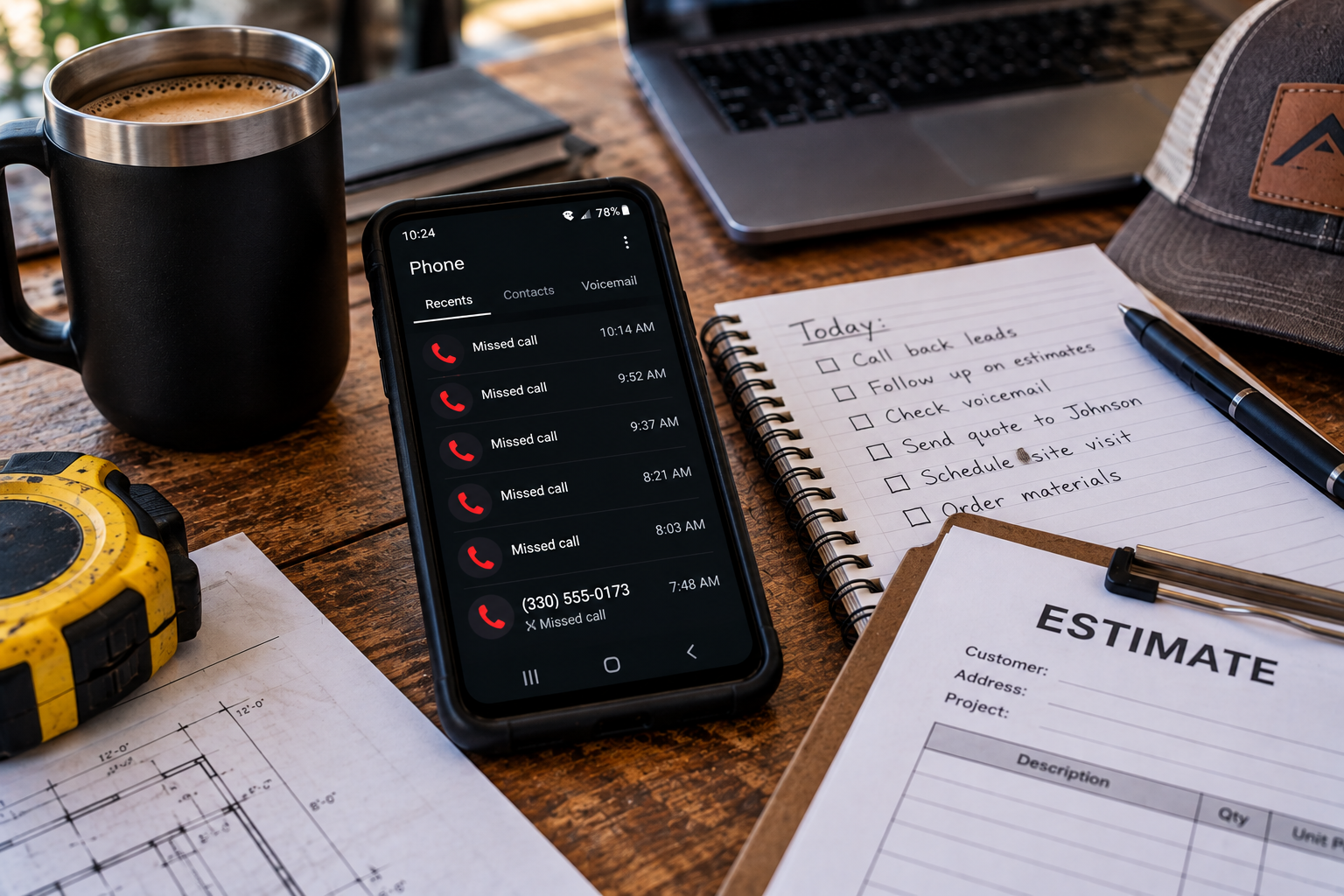
Neither does a missed phone call.
Or an estimate that was sent and never followed up on.
There’s an entire journey between someone raising their hand and that person becoming a customer. Every step in that journey is an opportunity to move them closer to a sale or lose them completely.
For a home service business, that journey might look something like this:
Lead → Response → Appointment → Estimate → Follow-Up → Sold Job → Review → Referral
Most marketing conversations focus heavily on the first step.
We think the rest deserves just as much attention.
How Fast Are You Responding?
Think about the last time you needed a contractor.
You probably didn’t fill out one contact form and patiently wait three days for someone to respond. You called around. You searched Google. You asked for recommendations.
Your customers are doing the same thing.
When someone contacts your business, they’re often contacting your competitors too.
That makes response time part of your marketing.
If a lead comes in at 10:14 a.m. and nobody responds until tomorrow afternoon, the problem isn’t necessarily that you received a bad lead.
Someone else may have simply gotten there first.
What Happens to the Missed Calls?
Your team is working.
Someone’s on a roof. Someone’s in a basement replacing a furnace. Someone’s driving between jobs. The office is helping another customer.
The phone rings.
Nobody answers.
What happens next?
Does that person receive a text letting them know you’ll get back to them?
Does someone have a process for returning the call?
Can you see whether anybody followed up?
Or are you hoping they leave a voicemail and wait?
A missed call shouldn’t automatically become a missed opportunity.
And Then There’s the Estimate
This is one of the biggest leaks we see in the customer journey.
You did everything right.
You generated the lead. You responded. You scheduled the appointment. Someone drove to the customer’s home. You spent time looking at the job. You prepared the estimate.
Then you sent it.
And waited.
When the customer didn’t respond, everyone moved on to the next job.
But that estimate represents time and money you’ve already invested.
Following up isn’t being annoying. People get busy. Emails get buried. Homeowners collect multiple estimates. Projects get pushed back a week or two.
Sometimes the company that gets the job isn’t the company with the lowest price.
It’s the company that remembered to follow up.
Before You Buy More Leads, Find the Leaks
If you generated 100 leads last month but only sold five jobs, the immediate answer shouldn’t automatically be:
“We need 200 leads.”
First, find out what happened to the other 95.
How many were contacted?
How quickly?
How many booked appointments?
How many received estimates?
How many estimates were followed up on?
How many simply disappeared somewhere in the process?
Those answers tell you much more than a lead count ever will.
Marketing Shouldn’t Stop at the Lead
This is why Full Scope Marketing looks beyond lead generation.
We look at the entire Customer Revenue Journey:
Attract. Capture. Convert. Retain. Multiply.
Getting someone’s attention matters.
Turning that attention into revenue matters more.
Before you spend another dollar trying to fill the top of your funnel, make sure the opportunities already inside your business aren’t quietly falling through the cracks.
Because sometimes you don’t need more leads.
You need more from the leads you already have.
Ready to See Where Your Revenue Is Getting Lost?
Full Scope Marketing helps businesses connect the pieces between marketing, follow-up, sales and customer growth.
Marketing is only the beginning.